Durabond & Resbond
Stainless-steel-loaded high-temperature putties rated beyond 1100 °C. Bond, seal, protect and repair in the most extreme thermal environments — furnaces, boilers, kilns, heaters, exhaust systems and thermocouples.
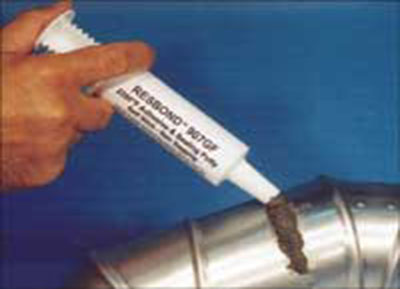
Stainless-steel-loaded high-temperature putties rated beyond 1100 °C. Bond, seal, protect and repair in the most extreme thermal environments — furnaces, boilers, kilns, heaters, exhaust systems and thermocouples.
Durabond and Resbond are stainless-steel-filled, high-temperature ceramic adhesive putties. They combine the bonding strength of a filled putty with the thermal stability of a ceramic — enabling permanent joints, seals and rebuilds in environments where conventional adhesives, gaskets and sealants fail.
The family covers bonding, sealing, potting, insulating and rebuilding tasks across continuous service beyond 1100 °C. Cures at room temperature with a heat post-cure schedule for maximum properties.
Joins metals, ceramics, refractories and glass — permanently, with no creep at high heat.
Gas-tight seals on hot flanges, ducting, inspection doors and thermocouple entries.
Forms a hard ceramic skin that protects substrates from oxidation and thermal shock.
Rebuilds refractory lining, cracks in furnace shells, and damaged hot-zone components.
| Continuous service temperature | Greater than 1100 °C (grade-dependent) |
|---|---|
| Fill | Stainless-steel particles in ceramic matrix |
| Cure | Room-temperature set; heat post-cure for maximum strength |
| Bond to | Metals, ceramics, refractories, glass, graphite |
| Electrical | High dielectric strength grades available |
| Chemical resistance | Excellent to most industrial atmospheres once cured |
Available in multiple grades and consistencies — paste, putty and castable. Contact us with your service conditions and we'll specify the right grade.
Tell us the substrates, service temperature, thermal cycling profile and atmosphere — we'll recommend the right grade and post-cure schedule.